NORHyWAY: Norway’s blueprint for a complete hydrogen value chain
“This is a breakthrough for Norwegian hydrogen development and a clear recognition of Norway’s strengths in leading the energy transition. With NORHyWAY, we will show Europe how to scale zero‑emission solutions from pilots to a functioning market,” says Thomas Bjørdal, head of the RENERGY industrial cluster.
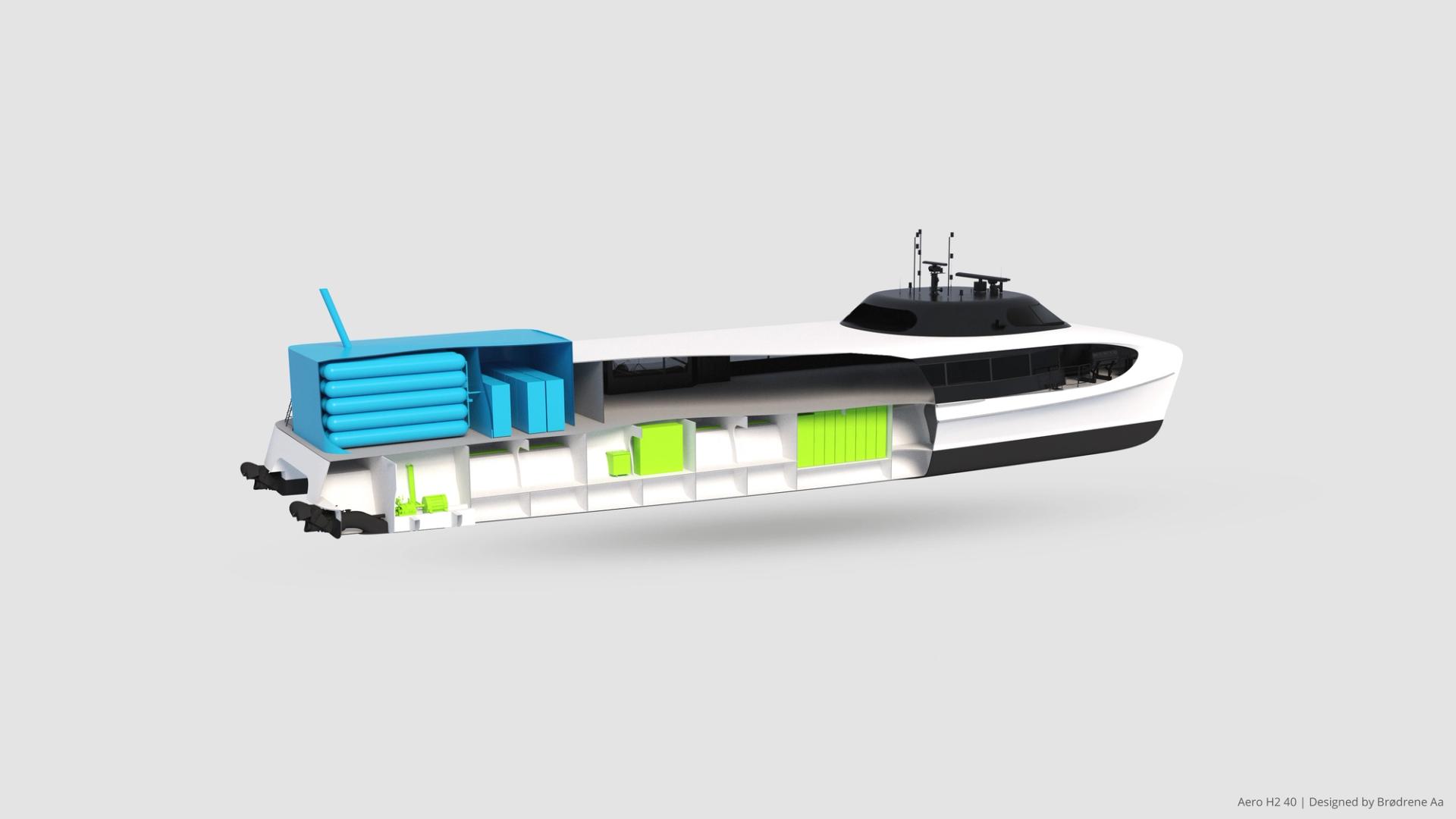
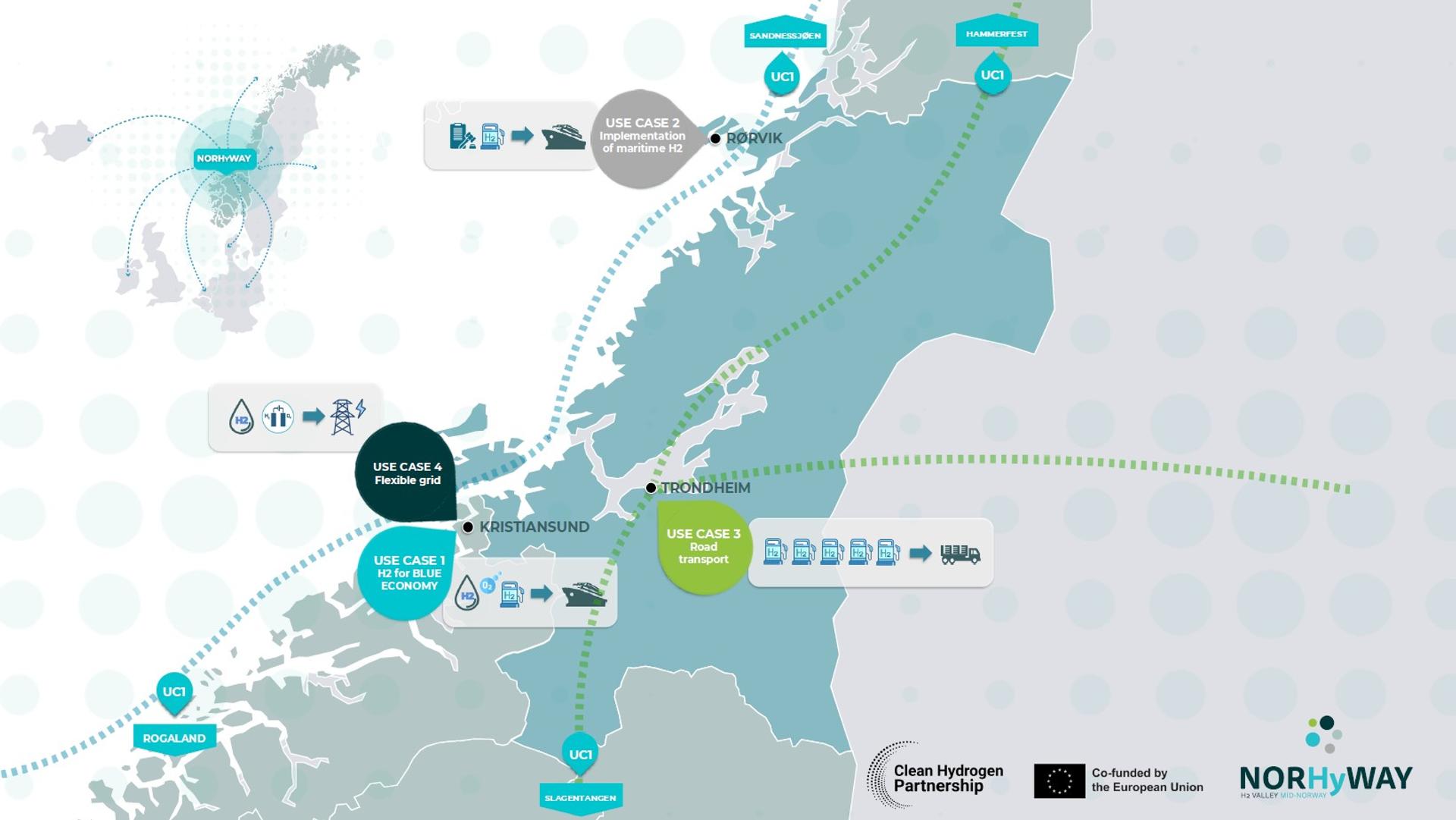
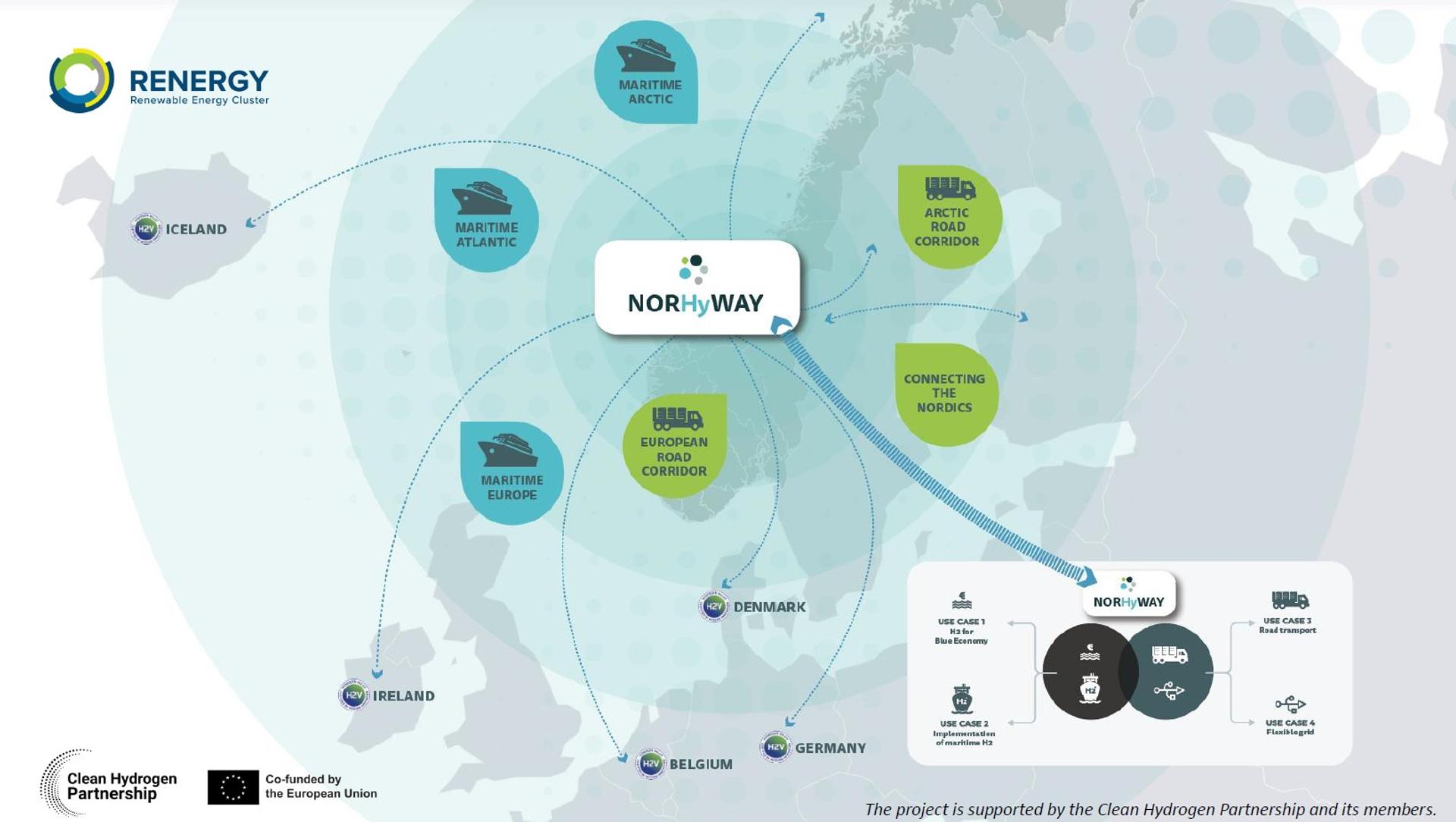
Last year, RENERGY successfully applied for and received EUR 21 million in funding under Horizon Europe. The project can now move forward to build Norway’s – and the Nordic region’s – first large‑scale Hydrogen Valley. NORHyWAY will demonstrate how a complete hydrogen value chain can be realised at industrial scale, increasing green hydrogen production and developing value chains for maritime and land‑based transport.
NORHyWAY represents a total investment of roughly EUR 963.3 million. The project aims to develop production capacity of 37 081 metric tons of hydrogen per year by 2035. This corresponds to an annual emissions reduction of up to 345 000 metric tons of CO2, which is comparable to the emissions from approximately 8 000–10 000 flights between London and Oslo.
At the launch of NORHyWAY, Minister of Climate and Environment Andreas Bjelland Eriksen described the project as “enormously exciting”.
“I’m looking forward to following the NORHyWAY project over the next five years. I believe this initiative is, in many ways, what we have been missing to unlock the next stage of the energy transition.”
Andreas Bjelland Eriksen
Norwegian Minister of Climate and Environment
Without EU funding, the project would not have reached the stage it is at today.
“We need to put Norway on this hydrogen map”
A few years earlier, Tim Genge, Senior EU Advisor and National Contact Point at Innovation Norway, noticed something striking. Europe was mapping out future Hydrogen Valleys. None were in Norway. None were in the Nordic region at all.
As an energy engineer, he knew Norway had the expertise and the resources to produce both green hydrogen from renewable energy and blue hydrogen from natural gas with CCS. The opportunity was simply waiting to be seized.
“So I reached out to the hydrogen players in Norway, including RENERGY in Trondheim, and said: we need to act. We need to get on this map.”
Tim Genge
Senior EU Advisor and National Contact Point, Innovation Norway
Norwegian hydrogen industry struggled to secure funding
At the time, RENERGY was involved in multiple national hydrogen projects, but the industry was struggling to generate sufficient demand to justify investment at scale. It was a textbook case of market uncertainty.
“You need a certain level of hydrogen production to bring the price down to somewhere near that of fossil alternatives. In other words, to scale production, you need a sufficiently large market,” says Ida Kallmyr Lerheim, Senior EU Advisor at RENERGY. “The market is hesitant to choose green alternatives because the costs and risks are perceived as too high.”
Norwegian support schemes offered no financial tools to reduce operating risk. When Genge reached out, RENERGY had already been made aware of the Horizon Europe call. It quickly became clear that this could provide the missing link.
Joining forces is the path to EU funding success
Genge acted as RENERGY’s listening post in Brussels, sharing insights into what would be important in an application to build a Hydrogen Valley. He also identified relevant consortia and partners, using his Brussels network to gather early information.
Meanwhile, Lerheim and RENERGY worked to unite Norwegian hydrogen players. Many companies were used to guarding their business secrets, but collaboration was essential.
“There was a lot of work involved in convincing companies to share more with competitors and also to seek funding outside the usual schemes. Eventually, everyone understood that the only sensible approach was to merge the many Norwegian projects.”
Ida Kallmyr Lerheim
Senior EU Advisor, RENERGY
For individual companies, preparing an EU application can feel like a Sisyphean task. The research organisation SINTEF came on board and together with RENERGY they reassured the participating companies that they would lead the application process.
“An EU application is a major and time‑consuming task for individual companies. We told industry that, as a cluster, we can take on this work for you,” says Lerheim.
A realistic and winning proposal for Norway’s Hydrogen Valley
RENERGY applied twice. The first attempt fell just short, but the European Commission encouraged a second try. The EU has a strong need for hydrogen in maritime transport, an area where Norway is world‑leading. The second application succeeded.
The EU highlighted the project’s realism, the commitment of Norwegian actors and the strong maritime focus. It also valued the diversity of end users. If one partner drops out, several others can continue. The application showed serious intent from credible industrial players.
With EUR 21 million in funding secured, NORHyWAY can now enter the next phase. “That’s when production facilities are completed and operational. Already now, the first vessel has been built, and our partners have orders for trucks. By 2035, the main investments will have been made, and by 2040 Norway will have a fleet of hydrogen‑powered vessels and trucks,” says Lerheim.
Green hydrogen production: Europe looks to Norway
Both Lerheim and Genge have strong confidence in the project. Genge notes that hydrogen is becoming an increasingly important part of the EU’s energy transition plans, supported by substantial investment in R&D and complete hydrogen value chains.
Hydrogen is seen as a supplement to other environment-friendly fuels, especially for heavy transport and medium‑distance shipping, where batteries fall short. The EU also allows the use of blue hydrogen until renewable energy production is sufficient for fully green hydrogen.
“The EU needs energy imports, and hydrogen and ammonia are energy carriers that are easy to transport to Europe. In addition to being alternative fuels, hydrogen can replace gas and coal in industrial processes,” Genge explains.
He believes more Norwegian companies should explore European funding opportunities, and that NORHyWAY shows how EU support can be essential for rapid realisation.
“NORHyWAY is also a particularly good example of how Norway contributes high‑level expertise and has technology and services that the EU wants. Norwegian actors can reap significant benefits and compete easily with European industry,” Genge says.
Explore more hydrogen and energy transition solutions from Norway
Connect directly with Norwegian companies leading the shift to zero‑emission industry and transport.