Skip to content
Events

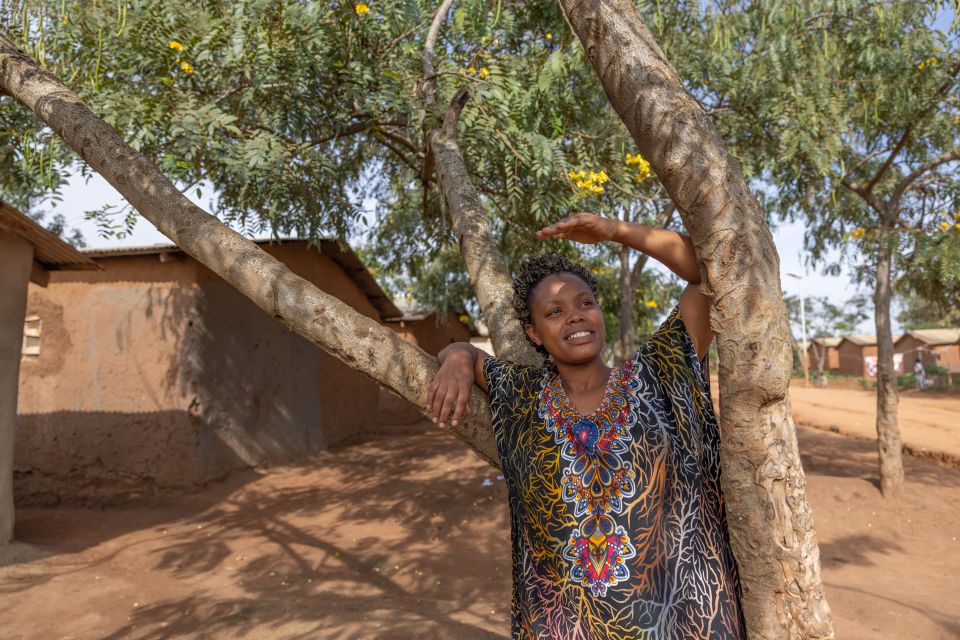
Woman leaning towards tree smiling
24 days to go

Innovating in Crises - Rising to the Challenge

5 March 2026, 09:00 - 16:00 GMT+03:00

Location: Shamba Events, Nairobi, Kenya

Seminar

What does it take to innovate in some of the world's most challenging contexts? On March 5th, we invite you to join humanitarian innovators, funders and private sector partners to explore that question, and work together on the solutions; from how we innovate for an uncertain future, to how we scale the approaches that are working.

Throughout the day, you’ll gain insight into concrete humanitarian innovations and how you can contribute to scaling their impact. You will have the opportunity to create an idea addressing a real humanitarian challenge, developed alongside other participants, and receive practical insights from experienced practitioners on shaping the future of humanitarian response through innovation, partnership, and systems thinking.

Who you’ll meet

The day brings together a diverse group of actors working across humanitarian response and innovation. Participants include humanitarian practitioners and innovators advancing solutions in crisis contexts; social enterprises and entrepreneurs; donors and funders exploring new financing pathways; and private-sector partners engaging in humanitarian innovation.

The mix is intentionally cross-sector, creating space for meaningful exchange, new connections, and collaboration across traditional boundaries, bringing together people who design, fund, deliver, and scale humanitarian solutions.

Agenda

Innovating in crises challenges us to take risks, adapt quickly, and develop solutions under extreme conditions. During this event, you will hear from people driving change and delivering impact in new ways, explore practical examples of innovation in action; and work alongside peers from different sectors to tackle live challenges submitted by ongoing projects, not just hypothetical case studies.

  • 9.00: Arrival & coffee
  • 9.15-9.45: Welcome:
    • Siv Cathrine Moe, Norway’s Ambassador to Kenya
    • Therese Uppstrøm Pankratov, Head of the Humanitarian Innovation Programme at Innovation Norway
  • 9.45-10.00 Keynote: TBC
  • 10.00 -10.15 HIP-heist and other logistics for the day: Oliver Muchiri, ThinkPlace Kenya
  • 10.15-10-45: Tea break
  • 10.45-11.45: Pioneer Spotlight: Real‑World Solutions from the Frontlines of Innovation
    • ADRA and Response Innovation Lab: Innovation for Financial Resource Mobilization in Somalia
    • UNICEF: Laaha at Scale: A Feminist Digital Lifeline for Women & Girls
    • Save the Children: Bridging the Digital Divide
    • Engineers Without Borders and Field Ready MENA: Enhancing Access to Safe Drinking Water in North-West Syria
    • IOM: Scaling E-Waste and Energy Access Circular Models
  • 12-13.00 Panel discussion: Unconventional Allies - Reinventing Partnerships and Capital for Humanitarian Innovation
    • The panel will bring together voices across the humanitarian and private sectors to discuss how we can develop and scale effective innovations through new types of financing pathways and partnerships.
  • 13.00-14.00 Lunch
  • 14.00-16.00: Co-creation session
    • Groups work together on a humanitarian challenge in need of an innovative solution. Develop a concept defining key elements: problem statement, solution outline, intended impact, and assumptions.
  • 16.00-16-20: Closing remarks
    • Emilie Skogvang and Ragnhild Nauste, Innovation Norway

Practical information

Read more about the Humanitarian Innovation Programme here.

For more information, please contact us:

Ragnhild Nauste

Senior Advisor, Innovation Norway

Register now

Organisers

logo of INNOVATION NORWAY

INNOVATION NORWAY

Website

Partners

logo of ROYAL NORWEGIAN EMBASSY IN NAIROBI

ROYAL NORWEGIAN EMBASSY IN NAIROBI

Website

logo of THINKPLACE KENYA

THINKPLACE KENYA

Website

Important conditions

Companies must adhere to standards for responsible business conduct, including Environmental, Social, and Governance (ESG) criteria.

Participants are expected to operate in accordance with the UN Guiding Principles on Business and Human Rights and the OECD Guidelines for Multinational Enterprises on Responsible Business Conduct. This entails conducting business responsibly, respecting human rights, ensuring decent working conditions, safeguarding environmental considerations, and actively preventing corruption.

Companies must carry out their own due diligence assessments (risk assessments) to identify, prevent, and mitigate potential adverse impacts.