Norway accelerates Europe’s responsive space capability
Published 1 Feb 2023 (updated 27 Apr 2026) · 3 min read
What if a satellite could be launched almost as quickly as ordering a product online and having it delivered to your door?
That question framed the responsive space debate a few years ago. Today, it is far closer to reality.
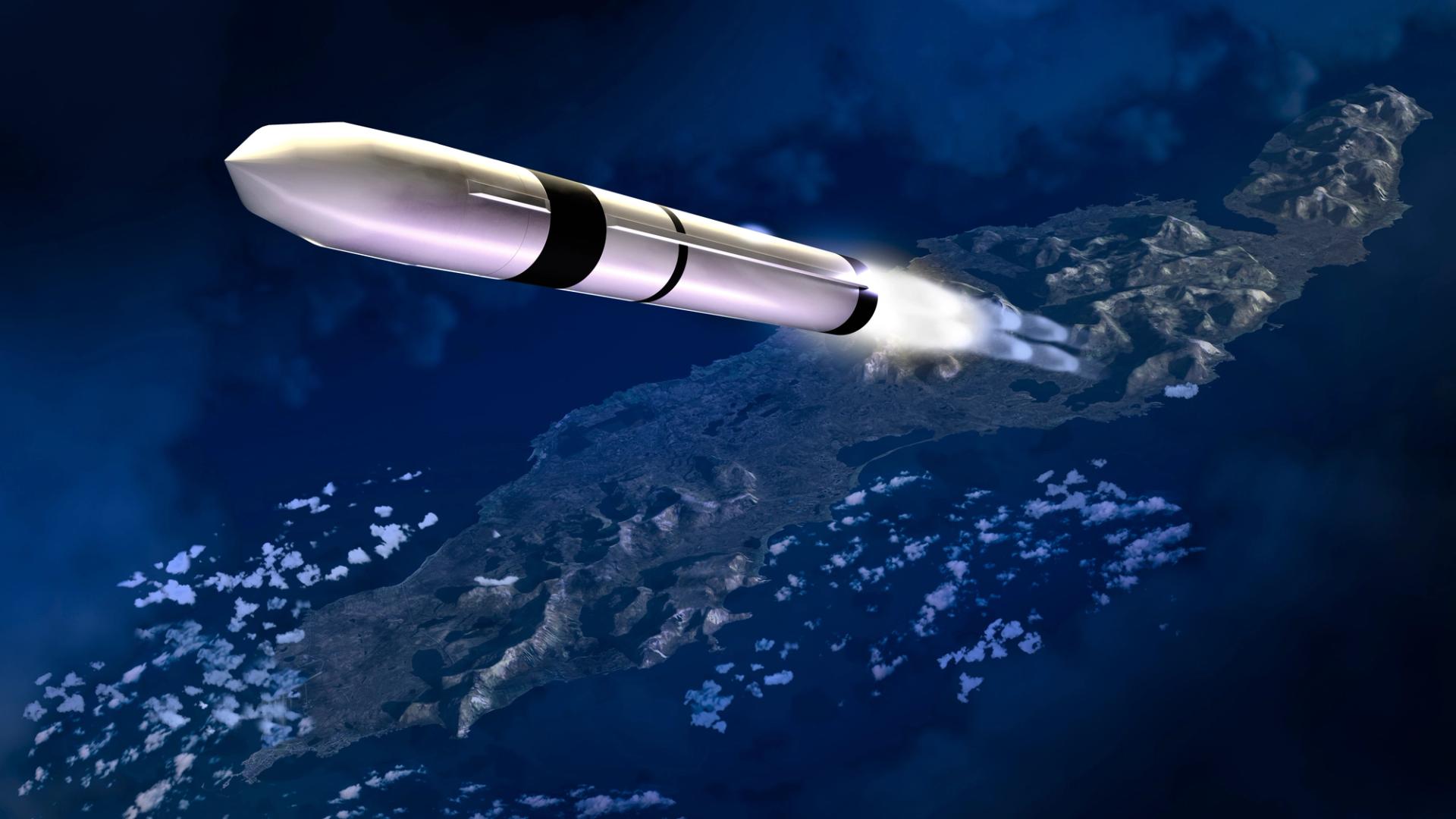
With a fully operational spaceport in the High North and new European launch services, Norway has moved from promise to delivery in responsive space.
“Right now we are on the verge of something big in responsive space, and Norway is far out in front.”
Christian Hauglie-Hanssen
Director General, Norwegian Space Agency
Responsive space is not a new idea. Since the 1990s, it has referred to the rapid launching of low-flying spy satellites to support troops on the ground. The modern interpretation is broader and more relevant to civilian society. Today, responsive space means the ability to deploy small satellites quickly, into precise orbits, at a competitive cost. This may include commercial ventures and public service-based satellites as well as military space assets.
“The key terms here are small, agile, industrialised and serial manufacturing for a specific task,” notes Christian Hauglie-Hanssen, Director General of the Norwegian Space Agency.
Norway’s space experience is a well-kept secret
These characteristics align closely with Norway’s strengths. The country has a long, if not widely known, track record in space activities linked to research, defence, maritime operations and Earth observation. (See the fact box below.)
Hauglie-Hanssen adds another key advantage: stability. “The Norwegian space industry is low risk. We have a stable democracy and security of supply,” he points out.
All of these advantages are being translated into infrastructure and services that meet today’s demand for security, speed and resilience.
Andøya Spaceport: blasting off in the High North
At the centre of developments is Andøya Space in North Norway. Purpose-built for small satellite launches, the spaceport is positioned to serve both European and other international customers. Few countries can offer a launch site on their own territory with direct access to polar and sun-synchronous orbits, minimal air traffic congestion and no need to overfly other nations.
“Norway has all the advantages to become an excellent provider of responsive space. We have a spaceport, seaport and airport in close proximity. Our geolocation is ideal for polar and sun synchronous orbits. We don’t need to fly over other nations and there is no air traffic congestion.”
Ketil Olsen
CEO and President of Andøya Space
Responsive launch is about more than geography. The surrounding infrastructure matters too. At Andøya, launch operators benefit from established logistics, prepared launch pads, reliable transport links and accommodation close to the site.
A European launch ecosystem takes shape
International collaboration is essential as well. Responsive launch is a complex operation, requiring extensive preparation and national and international agreements.
Great strides have been made at Andøya Space, where the German launch service provider ISAR Aerospace now has a dedicated launch complex at the spaceport. On 30 March 2025, the company successfully completed the first test flight of its Spectrum launch vehicle. It is waiting for a launch window for the second test flight after the most recent one on 9 April 2026 was scrubbed. This collaboration reflects a model where Norway provides the launch site, regulatory framework and operational stability, while international partners bring launch vehicles, payloads and complementary expertise.
Responsive space depends on trust and predictability as much as technology. Norway’s stable political environment, transparent regulations and strong safety culture reduce risk for customers. As a launch site operator, Norway has an ongoing responsibility for the satellites it launches, according to a UN treaty on the use of outer space.

Why responsive space matters
Satellites may be invisible to most of us, but modern society depends on them. Navigation, communications, weather forecasting, maritime safety, energy production and emergency response all rely on space-based assets. If critical satellites fail, whether through accident, congestion or deliberate interference, the consequences can be severe.
The ability to replace or supplement these assets quickly is therefore becoming a strategic necessity. Responsive space offers resilience. It allows governments, commercial operators and international partners to restore services, adapt to changing needs and respond to crises without long delays.
Responsive space is no longer a future ambition. It is an emerging market, and Norway is positioning itself as a practical problem-solver within it. By combining infrastructure, experience, international collaboration and a clear regulatory framework, Norway offers solutions to some of the most pressing challenges in space access today.
