Norway is a leader in future-ready offshore wind vessels
Published 10 Nov 2026 · 4 min read
“Norway may have the world’s best hybrid vessels for offshore wind,” says Sigurd Urdal, Special Advisor and Department Manager at Innovation Norway Vest.
That confidence is backed by a maritime industry that combines offshore experience, advanced vessel design, battery technology and increasingly flexible propulsion systems.
Norway’s offshore wind vessels are being built not just for today’s operations, but to adapt as lower-emission technologies mature.
“Norway’s robust value chains in offshore wind and green maritime make this possible.”
Offshore wind needs more than turbines
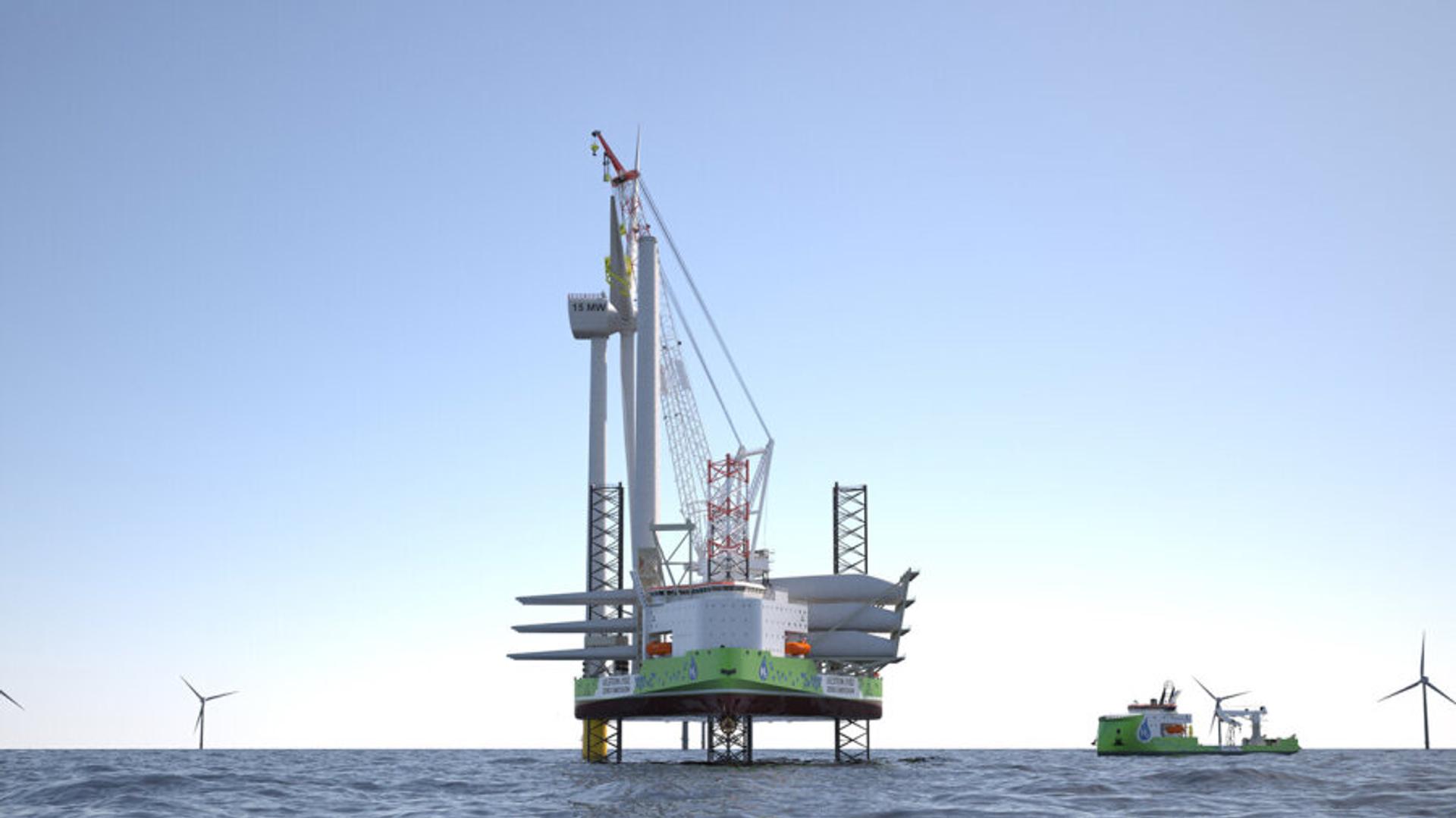
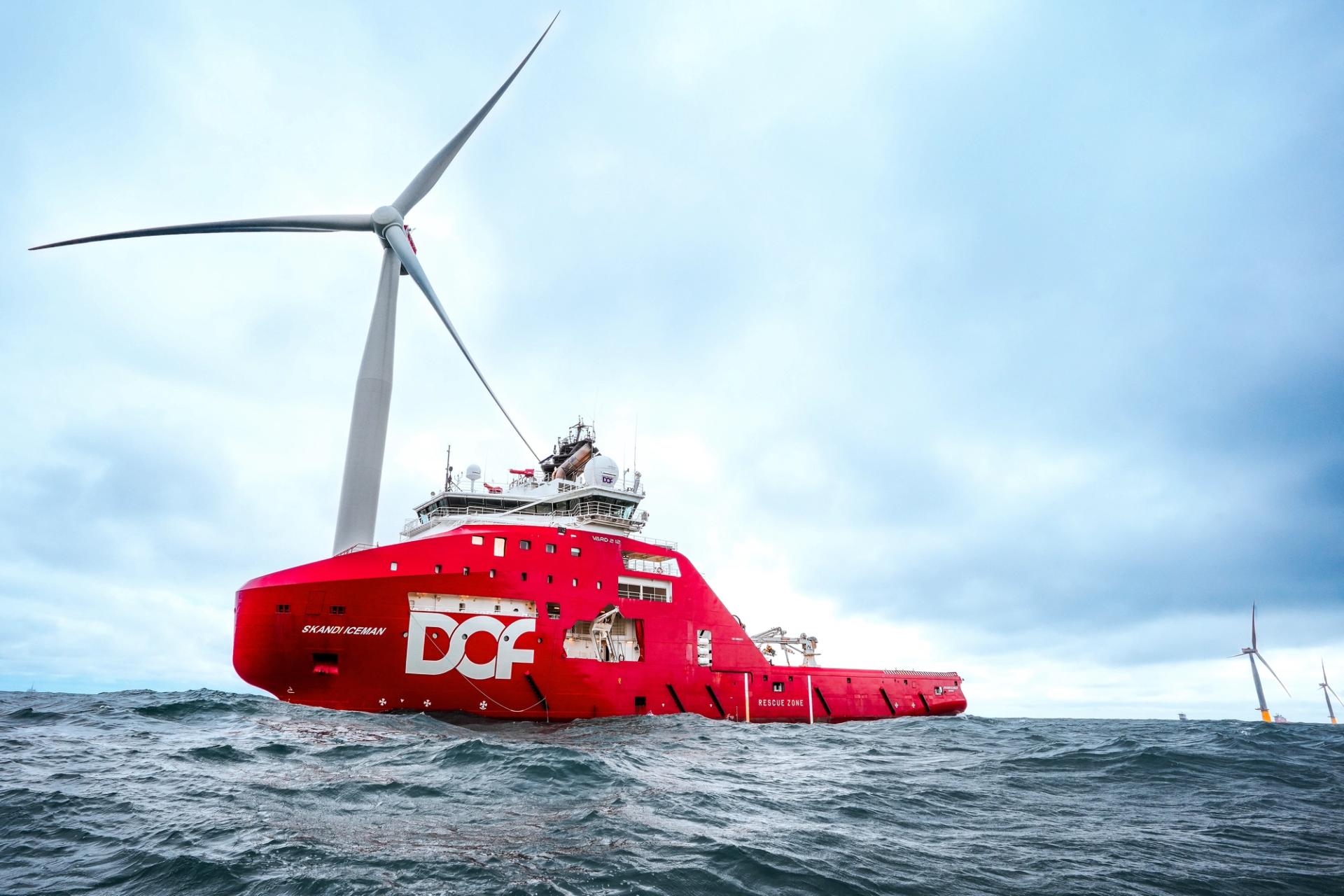
An offshore wind farm depends on a fleet of specialised vessels. Service operation vessels (SOVs) transport technicians safely between shore and wind farms, while commissioning service operation vessels (CSOVs) support installation and commissioning. Other vessels are needed for installation, maintenance and repair.
These ships must operate safely in demanding conditions while customers also seek to reduce emissions and improve efficiency. And because propulsion technology is evolving rapidly, shipowners face another question: how do you invest in vessels today without closing the door on tomorrow’s solutions?
Norway’s answer is to look at the whole offshore operation.
“Norway has many pioneering vessels, to be sure, but we also try to see how the vessel is connected to fit into the broader ecosystem of offshore operations. ”
Sigurd Urdal
Special Advisor and Department Manager, Innovation Norway Vest
“Through digitalisation and integration with logistics systems and other elements, Norwegian companies aim to maximise efficiency and address overarching challenges more effectively. It’s a holistic approach that looks beyond standalone innovations to create comprehensive solutions,” explains Urdal.
Battery hybrids offer flexibility today
Battery-hybrid and plug-in hybrid systems are increasingly used in offshore wind support vessels, especially SOVs and CSOVs. Larger vessels, including wind turbine installation vessels, can also use battery-hybrid systems, with batteries complementing rather than replacing their main propulsion and power systems.
Electric plug-in hybrids typically combine a rechargeable battery with a conventional combustion engine. The two power sources can operate separately or simultaneously.
This gives operators several options. Batteries can enable zero-emission sailing during manoeuvring and harbour operations and optimise the propulsion train through functions such as peak shaving, spinning reserve, blackout prevention and load ramp-up support.
Norwegian shipbuilders and technology providers are already delivering this approach at scale.
Norwegian solutions are operating internationally
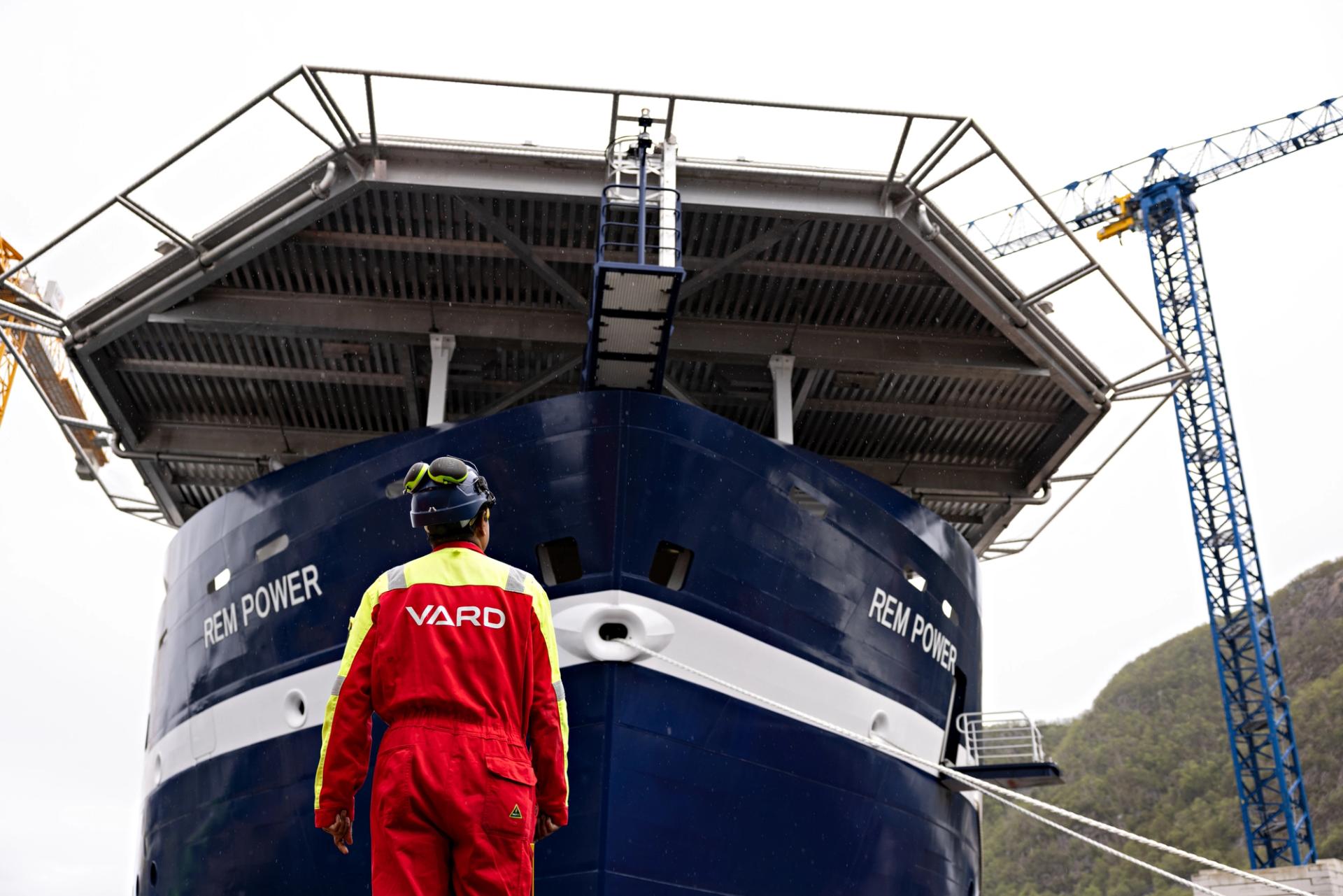
VARD, a major ship designer and shipbuilder, designed and delivered 11 plug-in hybrid or hybrid-ready CSOVs to Norwegian fleet operator Norwind Offshore between 2023 and 2026. A twelfth vessel, Norwind Marin, is planned for delivery in 2027.
“Our customers are ordering SOVs with battery hybrid propulsion, which is a large step towards zero emission operations.”
Amrit Bhullar
Former SVP Business Development and Group Innovation, VARD
Editor’s note: Ms Bhullar became CEO of Oceanbird on 1 January 2026.
Kongsberg Maritime has meanwhile designed six plug-in hybrid Skywalker-class CSOVs for IWS Fleet, a subsidiary of Norwegian offshore wind service provider Integrated Wind Solutions (IWS). The vessels were delivered between 2023 and 2025. Now, four more Skywalker CSOVs are on order, based on Kongsberg Maritime’s latest UT 5519 DEx design.
The next step is greater flexibility in the choice of fuel.
Building vessels for the next generation of fuels
Methanol is emerging as one option for reducing emissions from offshore energy vessels, and Norwegian companies are already designing it into new ships.
The Norwegian fleet owner and operator Eidesvik Offshore and Norwegian shipowner Agalas are building Viking Vigor, a construction support vessel (CSV) for subsea and offshore wind operations. Equipped with methanol engines and a battery-hybrid system, the vessel is planned for delivery in late 2026, followed by a sister ship in 2027.
Ulstein is taking a similar future-ready approach. In July 2026, Ulstein Verft delivered the CSOV Windea Clarke to German asset provider Bernhard Schulte Offshore. The vessel combines Ulstein’s TWIN X-STERN® hull design with hybrid battery propulsion and preparation for future methanol fuel.
In September 2026, Ulstein Design & Solutions signed a contract with PaxOcean Group to design an ULSTEIN SX222 offshore wind vessel. The SOV will be prepared for both methanol and fully electric operations.
The common thread is flexibility: vessels that work efficiently now while creating options for lower-emission operations in the future.
“There is an array of fuels that are being considered in the industry, which is made complex by cost, availability and other considerations. It is not a ‘one size fits all’. This is why VARD vessels are designed for future upgrades or conversion to zero-emission energy solutions,” says Bhullar.

A maritime cluster built on collaboration
Technology is only part of Norway’s offshore wind proposition.
Along Norway’s western coast, ship designers, shipyards, engineers and technology specialists work in close proximity. Long-standing relationships make it easier to combine expertise across vessel design, propulsion, batteries, energy management and system solutions
“Norwegians’ ability to work together is something special. We prefer to collaborate to solve problems rather than take opposing sides,” explains Bhullar.
The result is an ecosystem able to respond to complex projects and the short delivery times common in international offshore wind.
For customers, trust matters too.
“In my personal experience, the level of trust with Norwegian partners is high. Together with the competency established on technology and shipbuilding, Norway offers a reliable, high-quality output to the offshore market. This quality is invaluable in a complex, fast-paced, global industry,” she concludes.
Norwegian offshore wind solutions are north of the ordinary
Explore solutions and services from Norwegian ship designers and technology and contact the companies directly.