Around the world with Team Norway: Denmark and Norway share offshore vessel expertise
“The next five to ten years in the Danish offshore wind industry are looking very exciting,” says Yngve Sandanger, Senior Advisor at Innovation Norway Denmark.
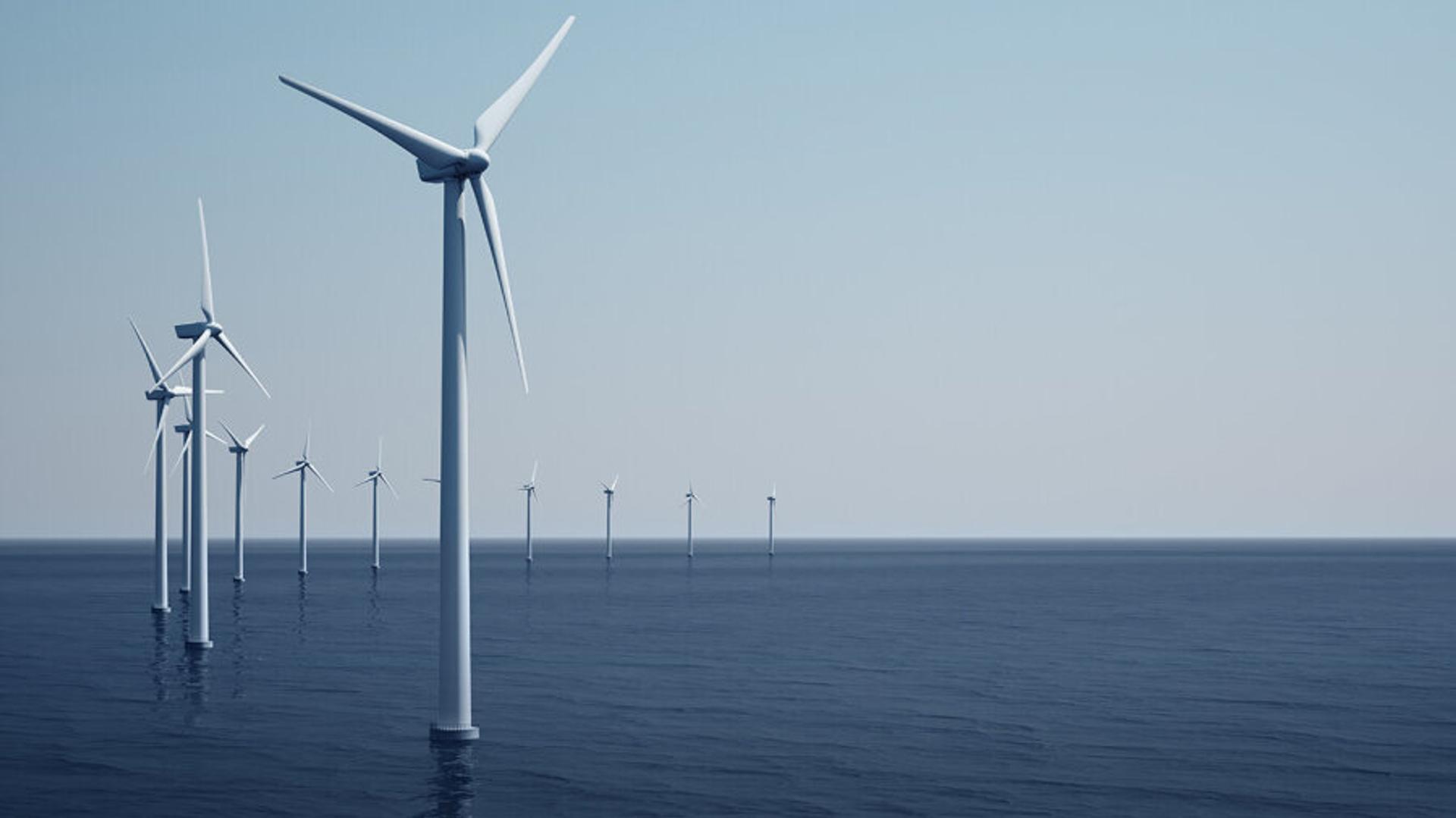
The market for offshore wind vessels in Denmark is expected to grow through new investments in sustainable energy and novel innovations. There will also be a growing demand for vessels capable of withstanding high waves and strong winds in the other countries bordering the North Sea – and beyond.
Norway and Denmark have complementary expertise
Denmark has long been a frontrunner in offshore wind development, while Norway already holds over 17 per cent of the offshore wind vessel market.
“It is fascinating to see how Norway and Denmark can leverage each other’s strengths in the offshore sector. Norwegian companies excel in vessel construction and operations in demanding weather conditions, while Denmark is known for its expertise in developing green technologies, particularly in offshore wind,” says Sandanger.
This gives Norwegian and Danish companies a unique opportunity to collaborate on everything from vessel design to the operation of offshore wind farms.
“They complement each other in ways that create value for both countries, especially through collaboration on vessel design for offshore wind projects.”
Yngve Sandanger
Senior Advisor at Innovation Norway Denmark
A challenge that often arises in such cross-border collaborations is a difference in standards and regulations. However, in this case barriers have been removed with the help of clear communication and Nordic initiatives promoting industrial cooperation. Overcoming cultural and regulatory differences has resulted in a solid platform for joint projects.
 Kongsberg Maritime’s vessel technology boosts sustainability in the offshore wind industryKongsberg Maritime delivers the world’s most advanced technology systems available for wind turbine installation vessels, improving vessel performance, worker safety and energy efficiency. “The solution we have devised for wind turbine installation vessels indicates how much thought and effort we devote to facilitating and encouraging sustainable marine operations,” says Egil Haugsdal, President of Kongsberg Maritime.
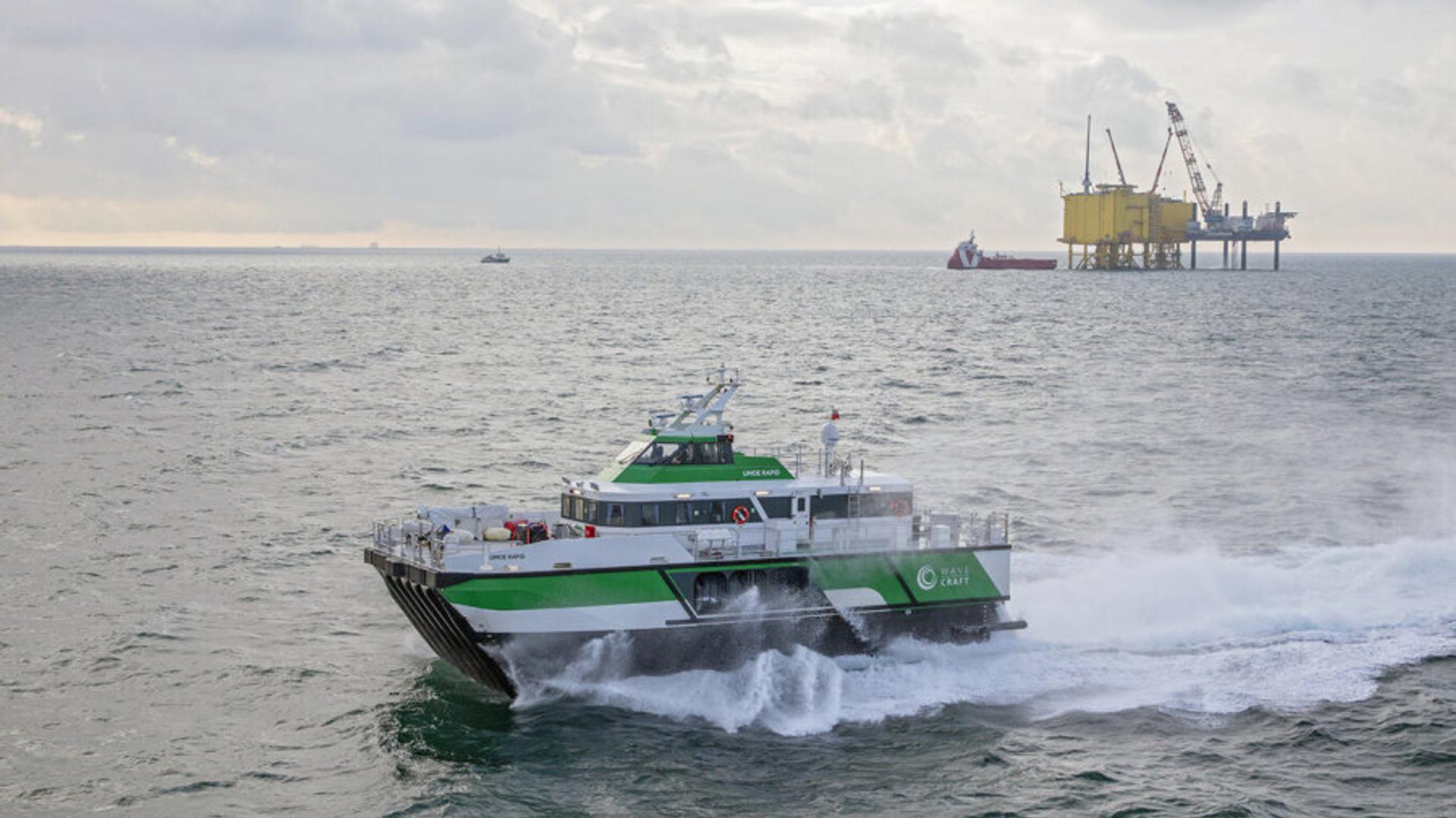 UMOE provides high-speed crew transfer vessels for offshore installationsWAVECRAFT Surface Effect Ships (SES) are high-speed vessels for medium to long-range transportation of service personnel.
Danish offshore wind technology is a global export
Denmark benefits from government investments in green technology and sustainable development. It exports technology through an established network of international suppliers and customers. Companies such as Vestas and Siemens Gamesa are global leaders in wind power and have opened doors for technology exports.
“New technologies include hybrid and battery systems to reduce fuel consumption and emissions, as well as digital monitoring systems that enhance operational and maintenance efficiency,” says Sandanger.
Autonomous solutions, such as remotely operated vessels for monitoring, are also a key focus area.
Autonomous vessels represent the future of offshore wind
Both Denmark and Norway have strong research environments that are developing autonomous solutions. The countries are also collaborating on technology that will bring a new dimension of safety and efficiency to offshore wind operations.
“Autonomous offshore vessels are expected to contribute to greater safety and efficiency in offshore wind operations, especially in remotely controlled or unmanned installations. Both Denmark and Norway are exploring joint initiatives, including research and development funded by the EU and national research programmes,” says Sandanger.
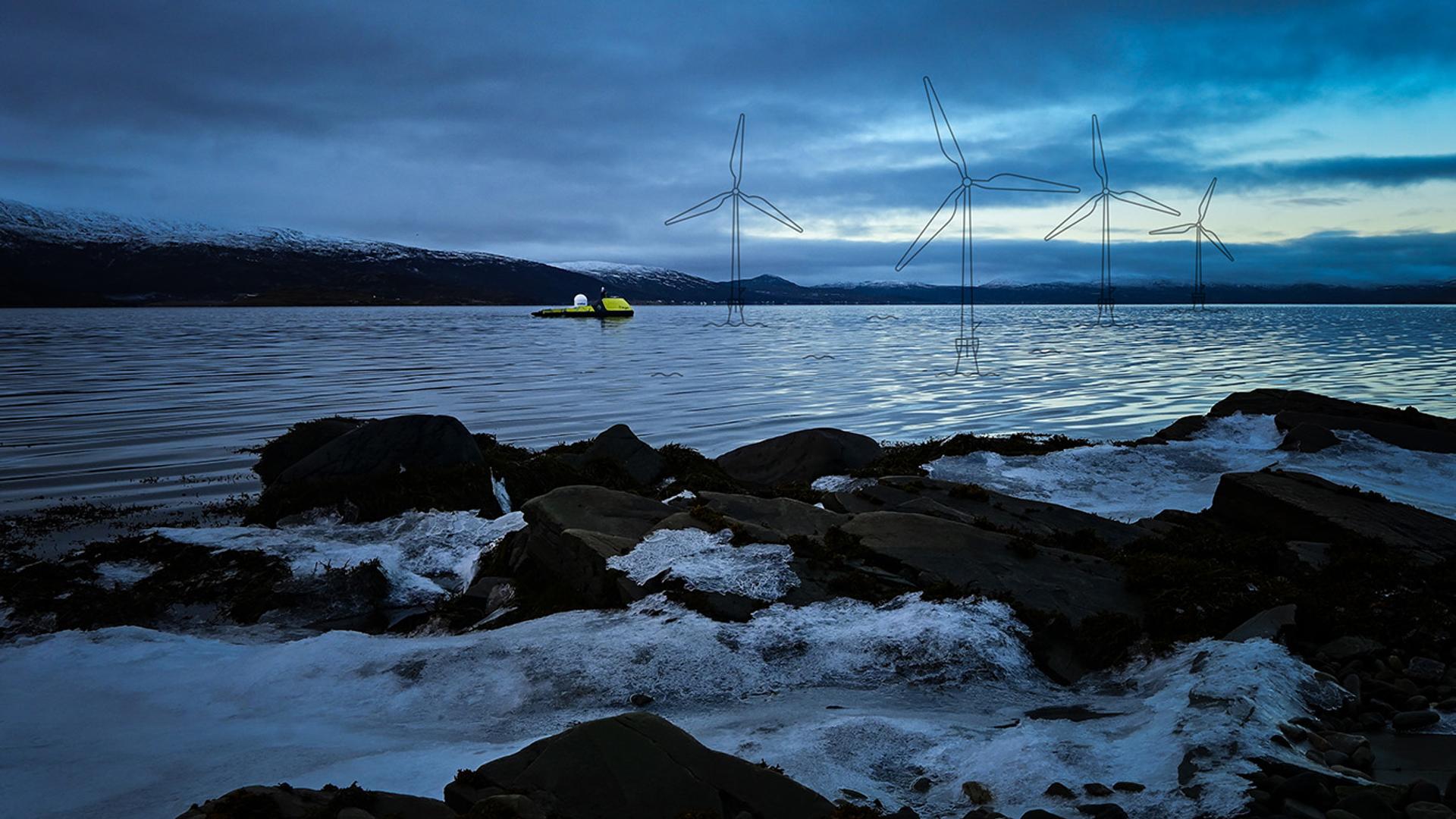 Argeo’s AUV robotics de-risks offshore wind projectsArgeo provides advanced survey and inspection services for offshore wind, de-risking projects and reducing fuel consumption by 99 per cent. “We want to transform ocean surveying and inspection by utilising our autonomous surface and underwater robotics solution,” says Thorbjørn Rekdal, Chief Technology Officer at Argeo.
 Remota enables large-scale remote operations in the ocean spaceRemota delivers large-scale remote control services to floating offshore wind farms, reducing operating costs and CO2 emissions. “By taking onshore control of offshore operations, we enable the transition to sustainable green energy,” states Sveinung Soma, CEO of Remota.
Joining forces to ensure a sufficient workforce
To meet the pressing need for skilled labour in the offshore wind industry, Denmark and Norway have launched several cross-border skill development programmes. These programmes aim to prepare workers for the future and include simulator training for complex offshore operations and courses on new environmental standards. Joint Nordic training programmes often receive support from Nordic organisations.
“Organisations such as Nordic Innovation support joint technology development within energy and sustainability. Some of these projects focus on autonomous solutions, green energy and offshore wind vessels,” Sandanger explains.
Developing specialised vessels for offshore wind
There is ongoing development of specialised vessels for offshore wind, including construction, transport and installation (T&I), maintenance and service operation vessels, to support the large-scale floating offshore wind farms being built in the North Sea. Ship designs are being optimised to withstand harsh weather conditions, perform precision tasks and, not least, minimise environmental impact.
As offshore wind projects are getting bigger, the need to focus on environmental challenges when developing offshore vessels is becoming increasingly important.
“Danish and Norwegian companies are working to reduce their carbon footprint by adopting zero-emission technologies and implementing energy-efficient measures such as electric and hybrid propulsion systems,” Sandanger says.
Both countries are also testing various carbon-reducing technologies, such as biofuels, hydrogen-powered engines and energy-efficient designs. These efforts contribute to achieving carbon neutrality goals in both Denmark and Norway.
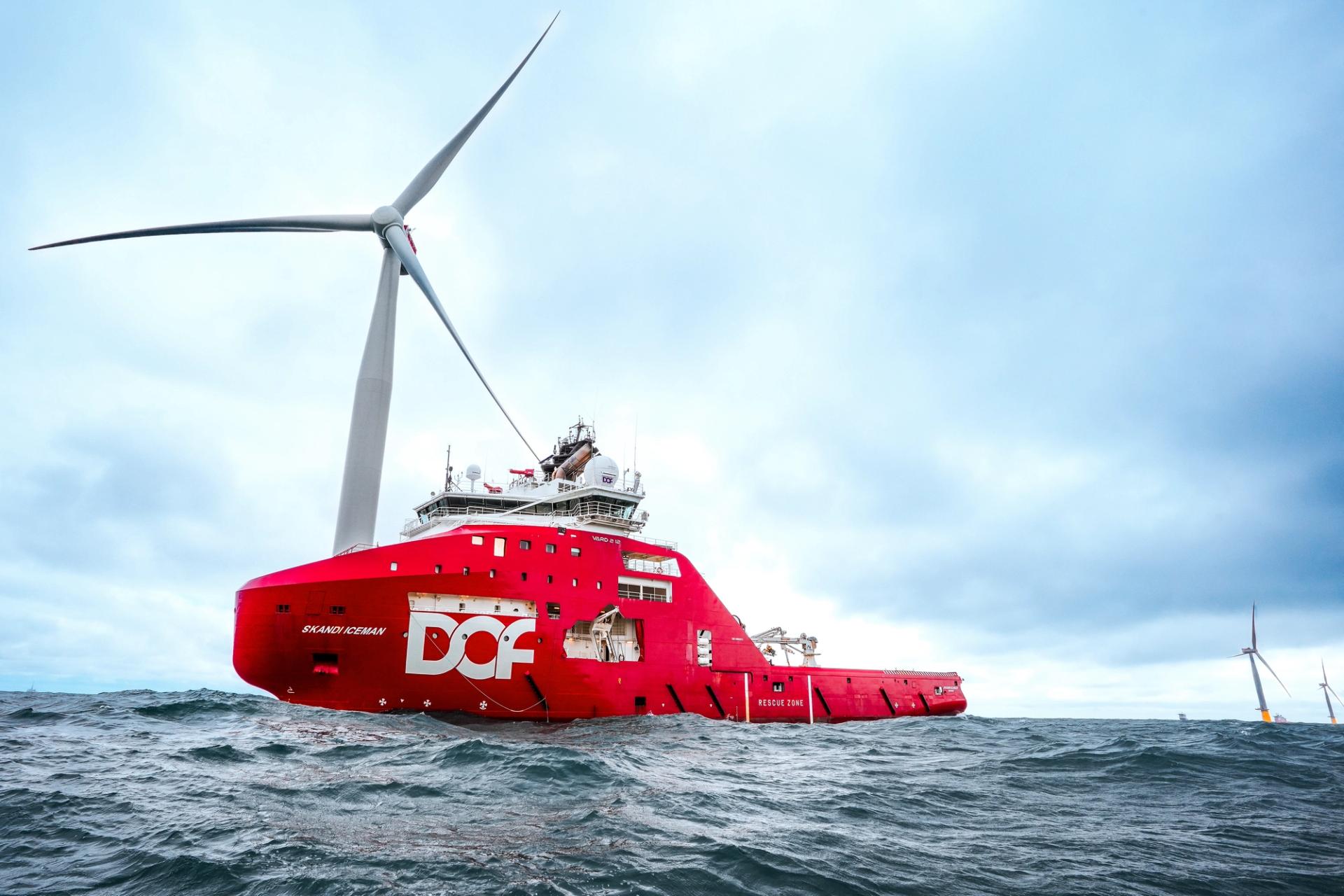
- DOF delivers full range of FOW engineering and construction services DOF provides advanced engineering and construction services for floating offshore wind farms, reducing costs, project risk and environmental impact. “We are a one-stop shop for floating offshore wind engineering and construction services. Our four decades of offshore sector experience makes this possible,” says Jan-Kristian Haukeland, EVP Renewables at DOF.
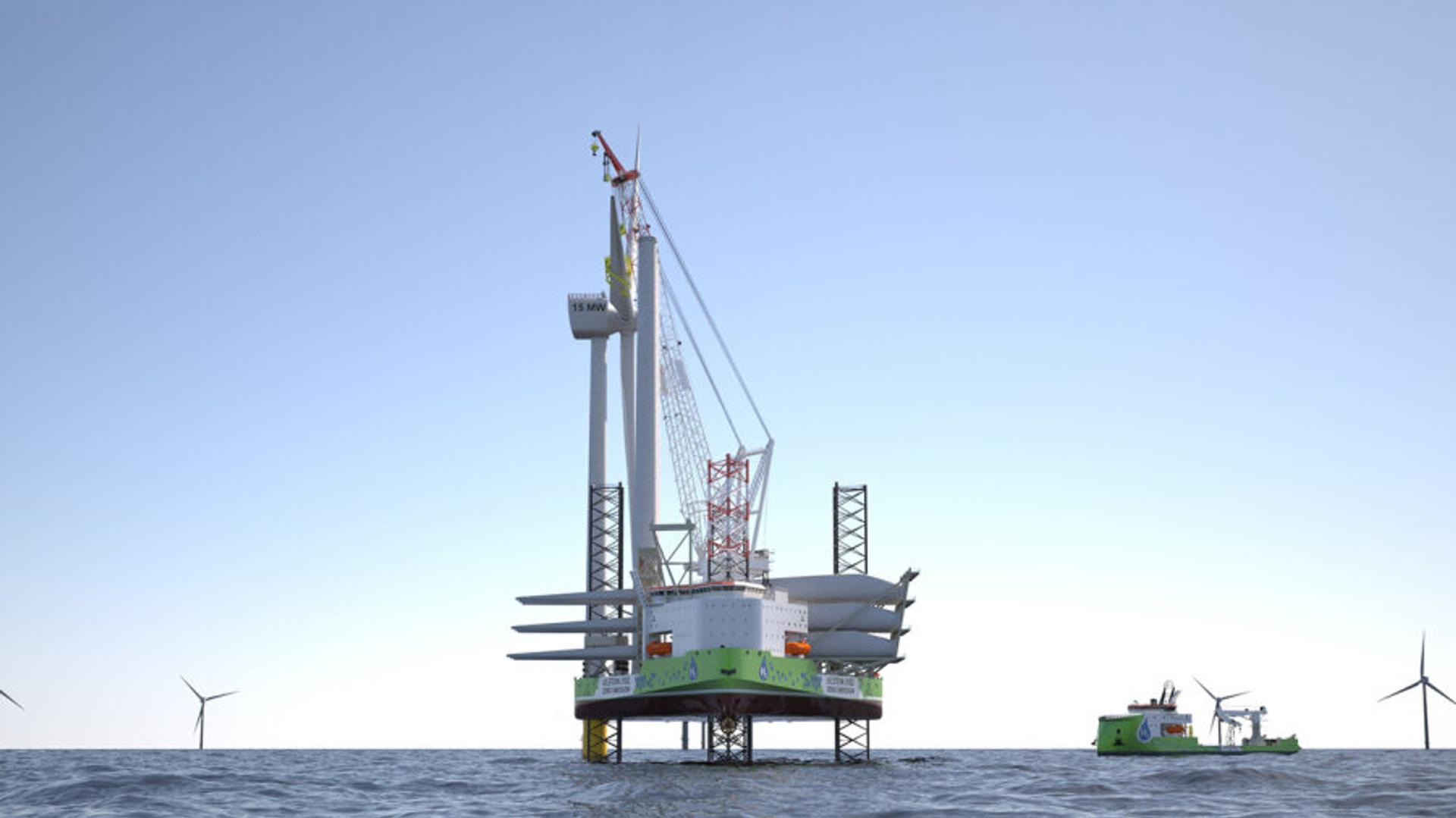 Green, hydrogen-powered offshore turbine installation vessel from UlsteinThe ULSTEIN J102 zero-emission wind turbine installation vessel uses a hydrogen-hybrid fuel system to dramatically reduce vessel emissions and improve the environmental footprint of offshore wind farms.
Future of Norwegian-Danish collaboration looks bright
The collaboration between Norway and Denmark provides a strong foundation for research and development and innovation in offshore wind vessels. It also creates opportunities for skill development and workforce growth, which both countries need. The next decade holds great promise as both countries continue to innovate, explore autonomous solutions and implement sustainable technologies.

